

How To Start Investing In Peer-to-Peer Lending: A Basic Guide


KEY TAKEAWAYS
The article introduces peer-to-peer (P2P) lending as an investment avenue that offers decent returns by lending money to others, contrasting it with informal lending to friends.
It outlines the history of P2P lending in India, starting informally in 2012 and becoming regulated by the RBI in 2017. The market is expected to double by 2026, highlighting its growth potential.
The current state of P2P lending is also explained, where investors can invest in collective pools managed by portfolio managers on platforms like Lendenclub and Lendbox, offering returns of 12-15%.
The risk and return profile of P2P lending is detailed out as well, especially noting the potential for an 11% pre-tax return but also highlighting risks such as borrower defaults and the impact of economic scenarios like COVID-19.
The article provides a step-by-step guide on how to invest in P2P lending, including registration, choosing investment plans, and understanding the pros and cons, such as diversification benefits and risks like default and liquidity
Most of us have that one friend in our group, to whom we often lend money, maybe to pay off a restaurant bill or buy a cup of tea, knowing fully well that we will either have to forget that money or probably wait for 2 months to get it back. But still, I continue to extend a line of credit to that one friend. And why not? It's not like I am going to get any interest on my money if I were to lend it to a stranger.
Well, this is where I went wrong, so here comes the twist. What if I told you that lending to others is an investment avenue and can give you decent returns? That's P2P Lending for you, let's get into the story and understand this investment practice in depth.
History
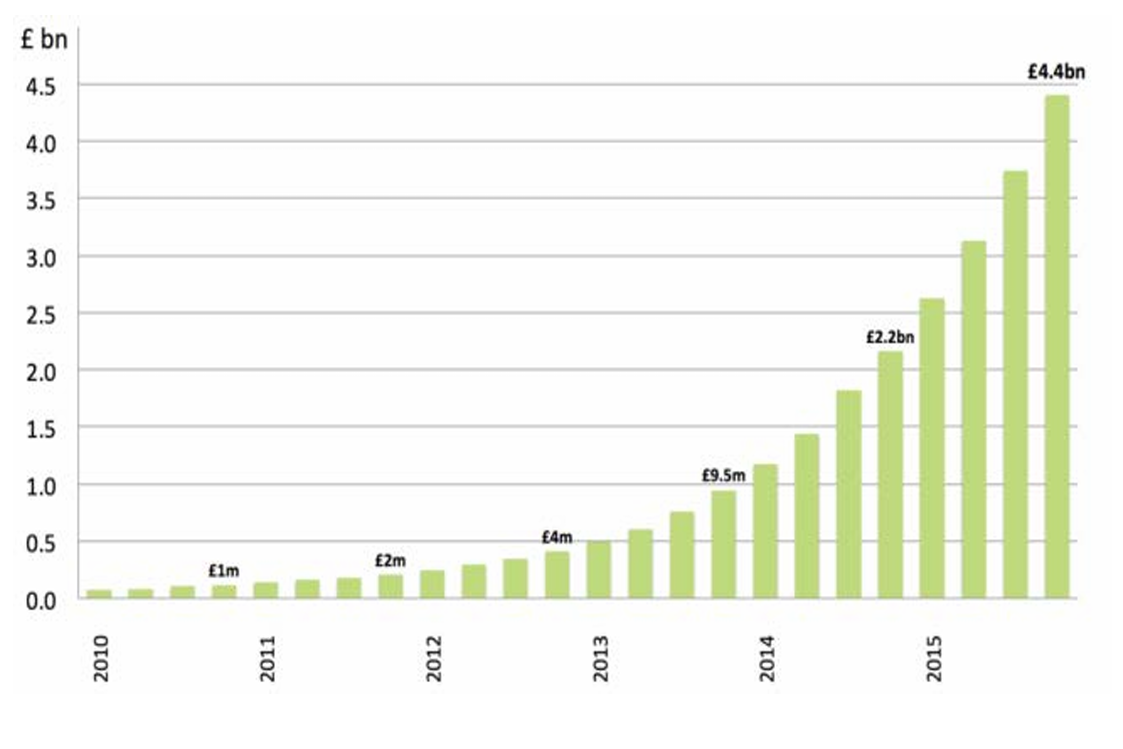
P2P Lending started informally in India back in 2012. In 2015, RBI took notice of this sector and estimated India's P2P lending market size to be around £4.4Billion. So in 2017, RBI through a Master Direction started regulating the activities of P2P platforms by making it mandatory to register themselves as an NBFC-P2P. This was of course to safeguard the interests of retail investors.
But before the Indian market flourished, the P2P market already existed in the global economy through platforms such as Zopa (United Kingdom 2005), Prosper Marketplace (California 2006), WeLab (China 2013) and many others. In India, more than 30 P2P lending platforms were operational by 2016 such as Faircent, LendenClub, LendBox & Finzy.
And guess what, as per the studies conducted by Industry ARC, this alternative investment is expected to double itself by 2026 to £8.2 Billion ($10.4 Billion).
Why this momentum?
Well to be honest the momentum has always been there but people used to lend and borrow money through unorganized sources. Like a personal loan advanced from friends and family, or a farmer borrowing from the Mukhiya of the village.
In 2012, with growing technology and the introduction to capital markets, investors saw the advantages of these P2P platforms as an alternative investment avenue with higher returns compared to an FD.
Whereas borrowers saw P2P platforms as a possible source of funding with zero collateral security and no credit history. Now an investor sitting in Mumbai could fund a farmer in Chandigarh all with a few clicks on the app. This revolutionized the entire lending space.
Current State of P2P Lending?
Currently, we are in 2023, more than 5 years since the RBI master directive came out, so the models of lending have changed quite a lot since then.
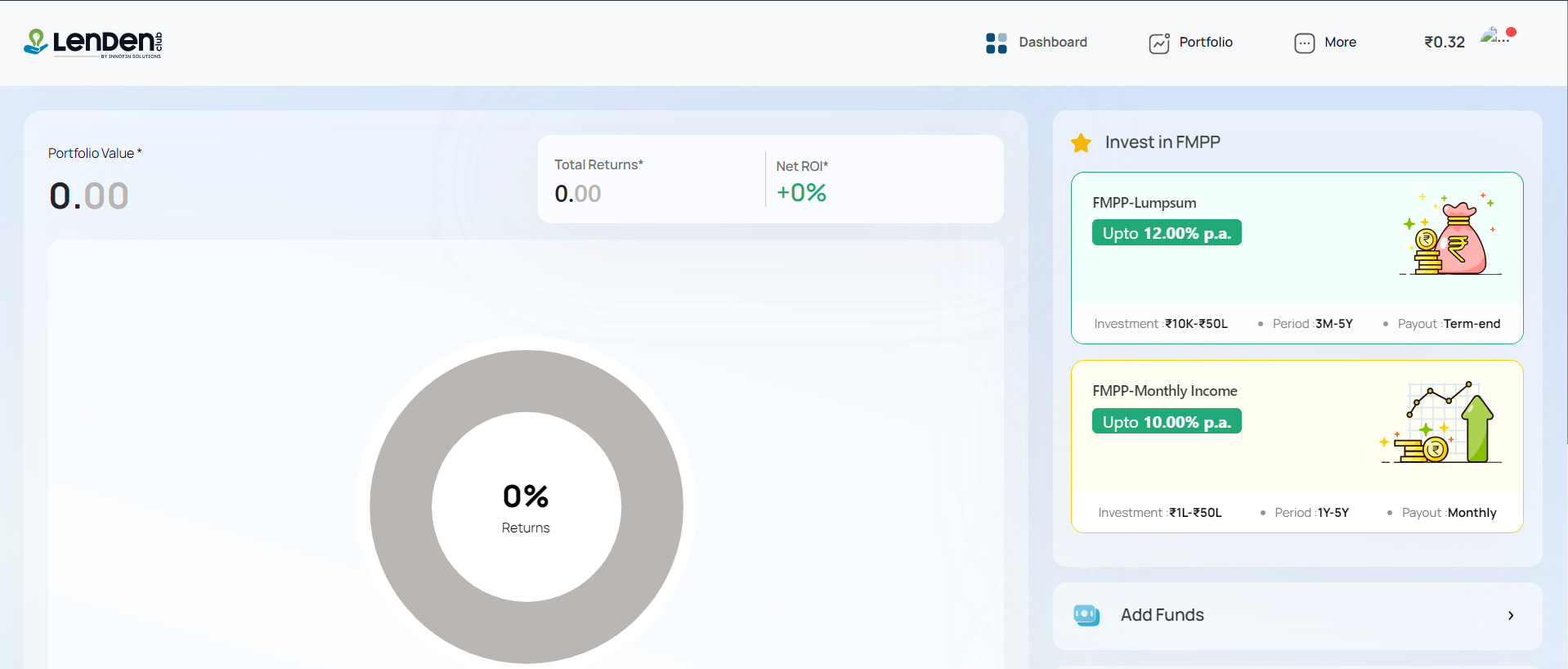
Now, P2P lending is an investment alternative opted by an investor, to invest funds in a collective pool managed by a portfolio manager. Such a setup is facilitated by platforms such as Lendenclub, Lendbox, etc. These platforms have certain plans, where they manage all the investments for you, while the investor can make returns up to 12-15%. All you have to do is invest and relax.
Being an investor, you would have to register yourself with the platform through basic KYC details. The platform then opens an Escrow Account, with you as it's beneficial owner.
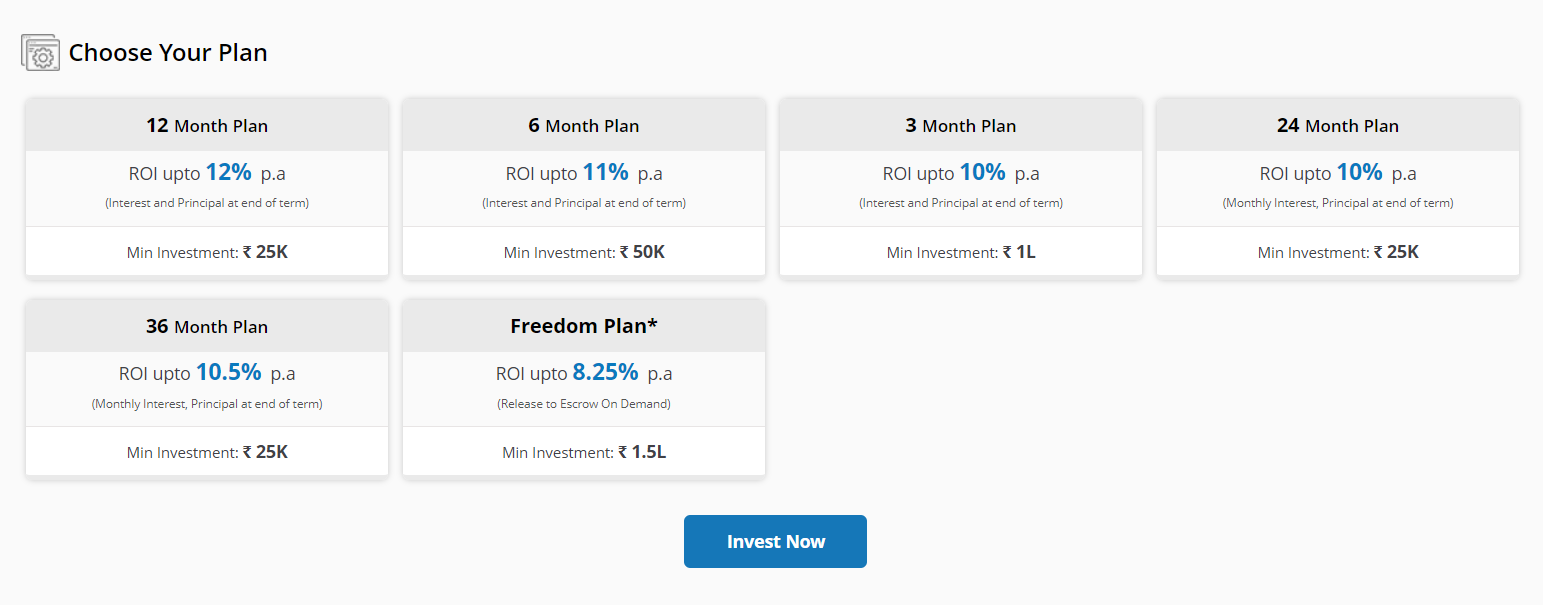
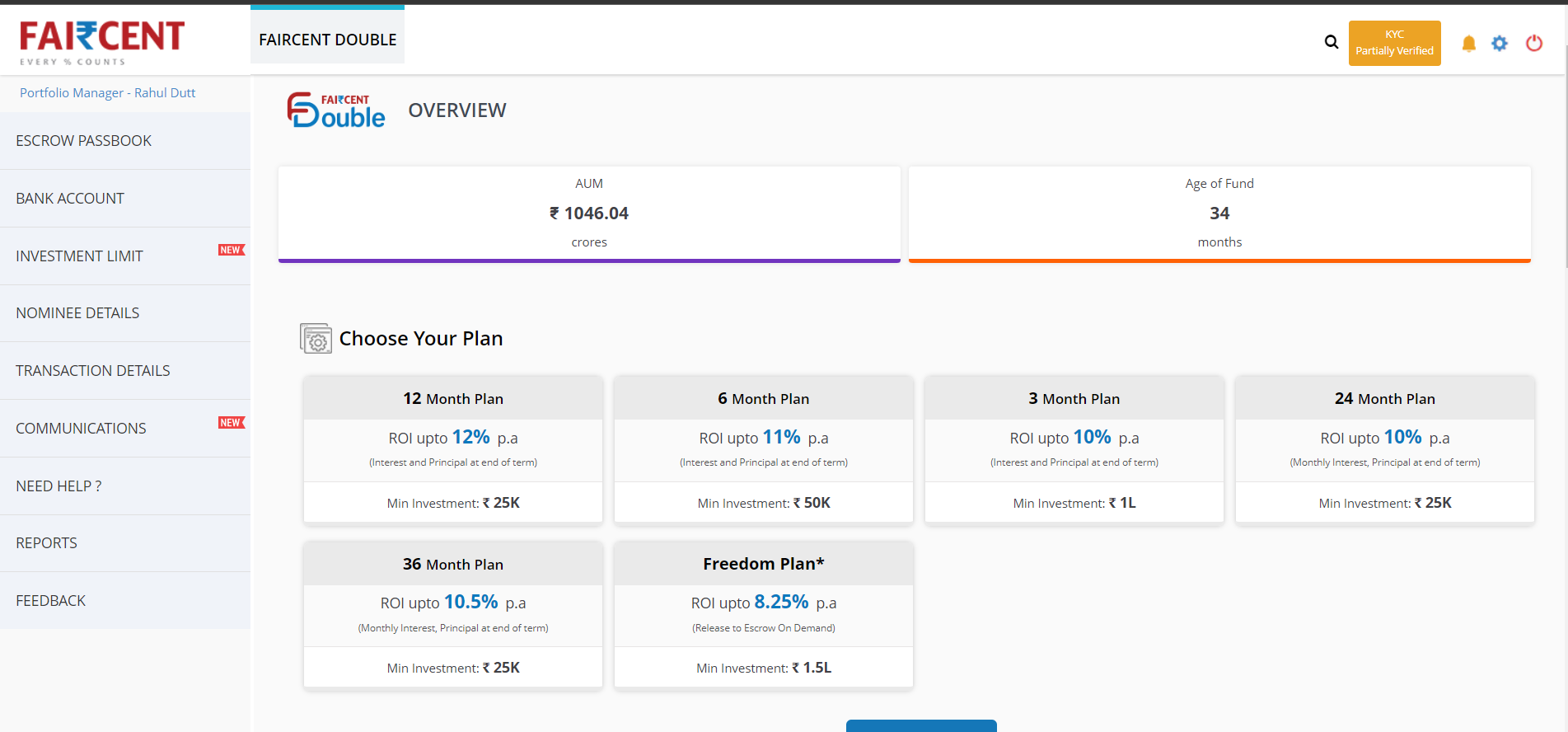
The platforms generally offer various investment plans to an investor based on varying risk and return profiles. For Eg. Faircent offers 6 plans to choose from, and LendenClub offers fixed-term plans and a recurring deposit plan.
Below are the investment plans offered by FairCent to an investor:
Below right in the image are the plans offered by Lendenclub.
How does the current model work?
Suppose you invested ₹ 1,00,000 on a P2P Lending platform like FairCent. The platform then further lends your money to a borrower. Since these borrowers don't have the best credit profile history, there is a high probability of default, for extreme measures, let us assume the default rate is 5% of the overall pool. The investment amount comes down to ₹ 95,000. Now, FairCent charges 14%-28% p.a. to borrowers for personal loans. Assuming a 20% p.a. borrowing rate on average, the investment value turns out to be ₹ 1,11,000 (95,000 + 19,000 - 3000), where ₹3000 in the platform fees.
Hence, you end up with an 11% p.a. return while the platform was charging 20% p.a. to the borrower.
Lending platforms do not earn from the spread rate but from fees charged for hosting a platform and facilitating financial transactions. This is usually around 2-3% of the capital deployed. They also never put their capital at risk, they make their fees regardless of whether the loan is paid back or not. So better to choose the platform wisely.
Statistics
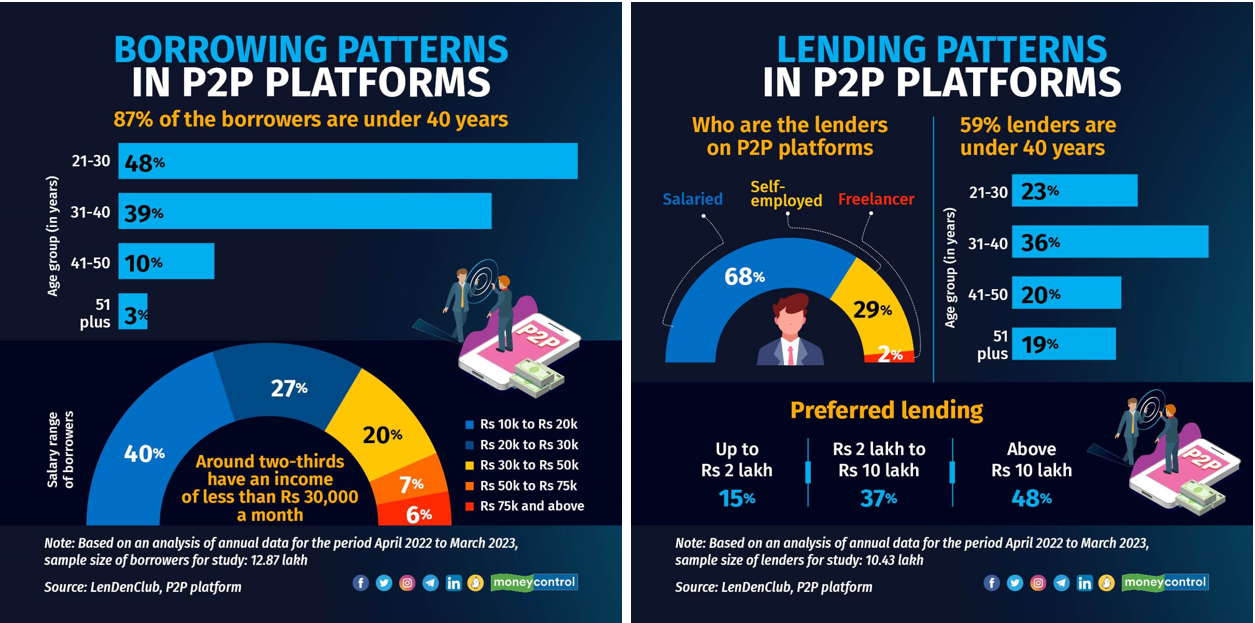
Let's look at some numbers around P2P lending. As per the recent case study done by MoneyControl over 13 lakh users of P2P platforms, 87% of the borrowers are millennials, who generally borrow through P2P to avoid bank formalities and regulations of raising funds. Also, 67% of the borrowers have a monthly income of less than ₹30,000, they borrow to maintain their minimum standard of living.
Among the investors, 68% are salaried employees whereas 29% are self-employed. Also, 69% of investors are millennials who engage in P2P to earn double-digit returns as compared to the older generation who have a lower risk appetite and prefer single-digit FDs. In addition to this, 15% are retail investors investing up to ₹ 2 Lakh whereas 48% have invested more than ₹ 10 Lakh.
Risk and Return Profile
In our previous example, P2P lending provided a pre-tax average return of 11%. However, the income is taxable as Other Income under Section 56(2) charged at applicable assessee rates (Learned about this in my profession) say 30%. So, the post-tax average return works out to 7.7%.
The 7.7% return might not sound a lot from risk adjusted return perspective. What if a COVID-like scenario hits again and there are more than 10% defaults in the pool of loans, you will make lesser returns than an FD.
The main risk in P2P lending is when borrowers don't pay back on time. The platform tries to get the money back, but sometimes they don't work hard to recover small loans because it can cost more than the loan itself.
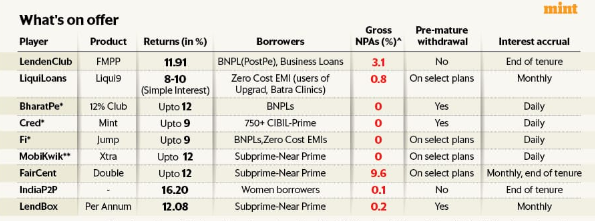
However, as per the recent case study by The Mint on P2P platforms, Impaired accounts or say Loss Accounts are close to NIL when compared with the total AUM of platforms except for FairCent and Lendenclub.
Steps to Invest
Suppose you have ₹50,000 to invest (maximum investment amount) and you choose FairCent as your lending platform. What would you do?
You would be required to open an investor account with FairCent with the following documents:
Bank Account Details
PAN Card
KYC Details/ Company Registration Certificate
CA Certificate if the amount of aggregate investment is more than ₹10,00,000
Now you are registered with FairCent, and FairCent creates an Escrow account for you.

After the creation of a bank account, you are displayed with various term plans offered by FairCent with a maximum tenure of 3 years. You would have to choose from these plans based on your financial objectives.
The Investment amount as specified shall be directly deducted from your Escrow Account.
Pros of Investing
Diversification
Investment in P2P diversifies an investor's portfolio into a different asset class since the returns are not linked to overall stock market performance where most of Indians invest.
Higher Returns
P2P lending provides higher returns (in our example 11%) in comparison to an FD of 6.5%-8% p.a. But to reiterate, you also take on more risk compared to FD.
Cons of Investing
Macro Risk: In the current economic scenario (August 2023) where banks are increasing interest rates on floating-rate home/personal loans, a lot of people cannot afford to pay back their existing loans with increased EMIs. Although P2P lending rates are fixed, but these people generally have ongoing loans with other financial intermediaries and prefer paying them first rather than an online platform.
Default Risk: Since the loan has been granted to borrowers who have low CIBIL scores or zero credit history, the risk that the borrower may default is high and you might lose your initial principal investment as well.
Liquidity Risk: In the current model, almost all platforms require you to lock in your money for a defined period, the longer the tenure, the better returns they offer. If you have selected a longer tenure, it is not possible to liquidate your investment and get it back easily in case of an emergency.
Bottom Line
The initial proposal which was pitched to investors of earning high double-digit returns is slowly wearing off as investors have seen many defaults, especially in the COVID era and the inability of platforms to recover those loans. I think personally, many other options offer better risk-adjusted returns on a post-tax basis. Some of them are in the alternative investments category as well (although not regulated like P2P platforms) and some are via secured debentures.
Personally, if you have a long-term horizon, you should invest in Mutual Funds/Equities based on your risk profile, but if you have a short-term horizon, you can try out P2P platforms or invest in other short-term corporate bonds via other alt investment platforms.
Hope you enjoyed the article, if you think there is something factually incorrect, please comment below the article to let us know.
Please note that this is an opinion blog and not official research advice. I am not a registered RIA in India. This blog aims to promote informed decision-making and does not discourage you from investing in any deals.
We plan to come up with more blogs discussing different types of instruments available in the world of startup investing, write on due diligence for some platforms, and also existing and upcoming alt investment deals in the Indian market. If you want to stay updated on the latest blogs, please subscribe to our newsletter so you get notified automatically.
Lastly, if you like our work, please feel free to sponsor us via Hashnode Sponsors.


